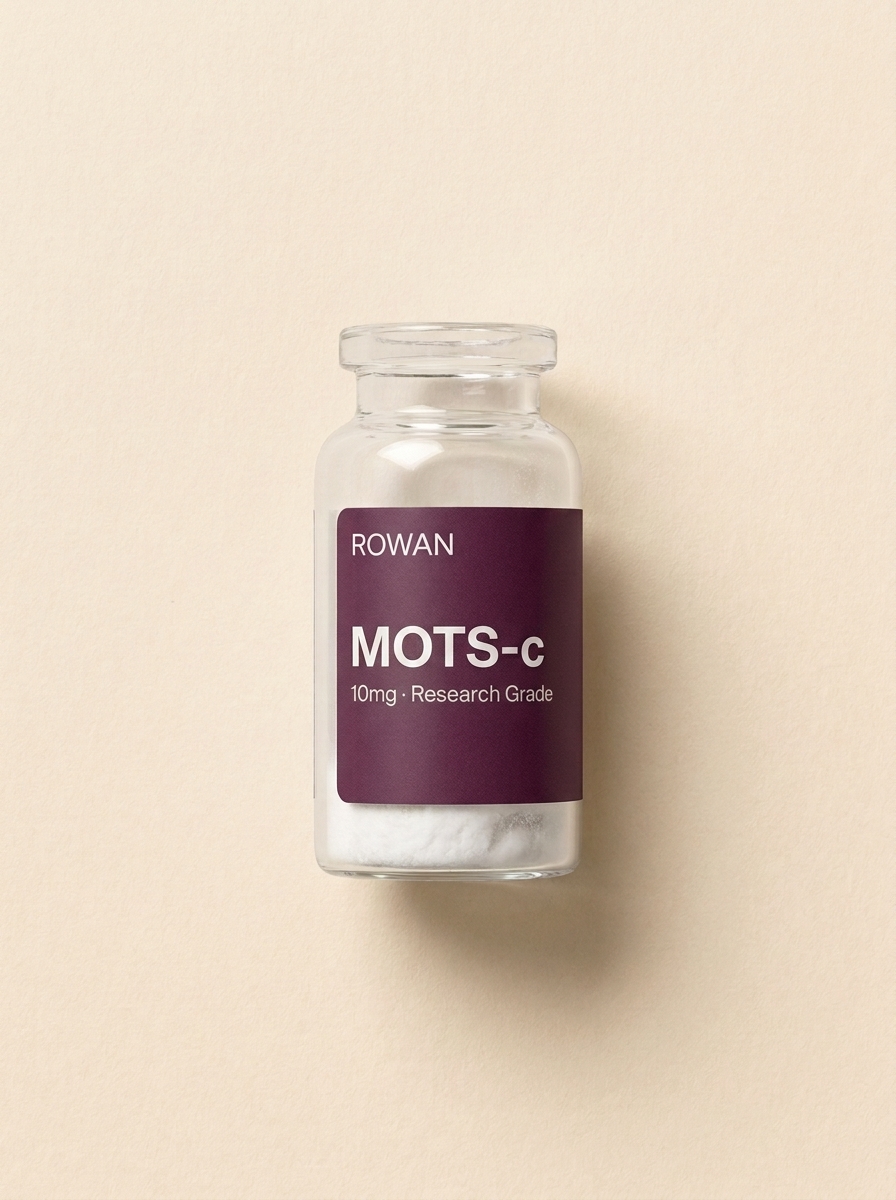
MOTS-c
A 16-amino acid mitochondria-derived peptide encoded in the 12S rRNA gene of the mitochondrial genome. Studied for its role in metabolic homeostasis, insulin sensitivity, and longevity signalling.
For laboratory and in vitro research purposes only. Not for human consumption.
What is MOTS-c?
MOTS-c is a 16-amino acid peptide encoded within the 12S rRNA gene of the mitochondrial genome — making it one of the first discovered mitochondria-derived peptides (MDPs). Unlike most signalling peptides encoded in nuclear DNA, MOTS-c originates directly from the mitochondria. It functions as a systemic hormonal signal under metabolic stress, activating AMPK and FOXO1 pathways to improve insulin sensitivity and metabolic function. Research published in 2021 found circulating MOTS-c levels increase with exercise in humans.

encoded in mitochondrial dna.
a new class of peptide.
Most peptides come from nuclear DNA. MOTS-c is different — encoded within mitochondrial DNA, making it part of a newly discovered class of signalling molecules called mitochondria-derived peptides (MDPs). It appears to function as a stress signal from the mitochondria to the rest of the body.
How MOTS-c works in research models
MOTS-c is one of the first discovered mitochondria-derived peptides (MDPs). It is secreted from mitochondria under metabolic stress and functions as a systemic signalling molecule. Research has shown MOTS-c activates AMPK and downstream FOXO1 pathways, improving insulin sensitivity, reducing adiposity, and enhancing exercise capacity in aged mice.

ampk. insulin sensitivity.
exercise mimetic research.
MOTS-c activates AMPK — the cell's master energy sensor — and has been studied as an exercise mimetic in aged mouse models. A 2021 Nature Communications study found plasma MOTS-c rises with exercise in humans, positioning it as a potential mediator of exercise's metabolic benefits.
The mitochondrial-derived peptide MOTS-c promotes metabolic homeostasis and reduces obesity and insulin resistance.
Cell Metab · 2015 · PMID: 25738459
MOTS-c is an exercise-induced mitochondrial-encoded regulator of age-dependent physical decline and muscle homeostasis.
Nat Commun · 2021 · PMID: 33436573
Preclinical mouse studies use 5–15 mg/kg intraperitoneal injection, typically 3–5 times per week. Reconstitute with sterile water or PBS. Store reconstituted solution at 4°C and use within 7 days.
You ask, we answer.
MOTS-c is encoded within mitochondrial DNA — not nuclear DNA — making it one of a newly identified class called mitochondria-derived peptides (MDPs). This mitochondrial origin directly links it to the cell's energy-sensing machinery, making it a novel class of metabolic regulator.
Yes. A 2021 study found plasma MOTS-c levels increase significantly following both acute and chronic exercise in humans, and that supplemental MOTS-c in aged mice improved physical performance and muscle function — suggesting it may mediate some exercise-related health benefits.
AMPK (AMP-activated protein kinase) is the cell's master energy sensor — it activates when ATP is depleted and promotes energy-producing processes. AMPK activation is associated with improved insulin sensitivity, fat oxidation, mitochondrial biogenesis, and autophagy. Many longevity-associated interventions (caloric restriction, metformin, exercise) work in part through AMPK activation.
MOTS-c belongs to a family of mitochondria-derived peptides (MDPs) that includes humanin and SHLP1-6. These peptides are encoded within mitochondrial DNA and appear to serve as hormonal signals communicating mitochondrial status to the rest of the body. MOTS-c is the most studied for metabolic and longevity-related outcomes.
Research Use Only
All Rowan Peptides products are intended strictly for laboratory and in vitro research purposes. They are not approved by the FDA and are not intended for human consumption, veterinary use, or any therapeutic application. By purchasing, you agree to our Terms of Service and Indemnity Waiver. Rowan Peptides LLC operates as a chemical supplier only.
Mitochondrial peptide research is a niche that's hard to source for. MOTS-c from Rowan is the first time I've seen this compound offered with real third party testing at the consumer level. 10mg vial, clean, purity verified. The metabolic regulation research angle is solid.
Added this to my longevity protocol research. The mitochondrial-derived peptide research is newer territory and I appreciate that Rowan carries it. COA showed 98.5% which is right where you want it for this compound.
Shipping was a day later than expected but the product was exactly right. First vendor I've found carrying MOTS-c at this quality level. Already ordered again.

Write a Review