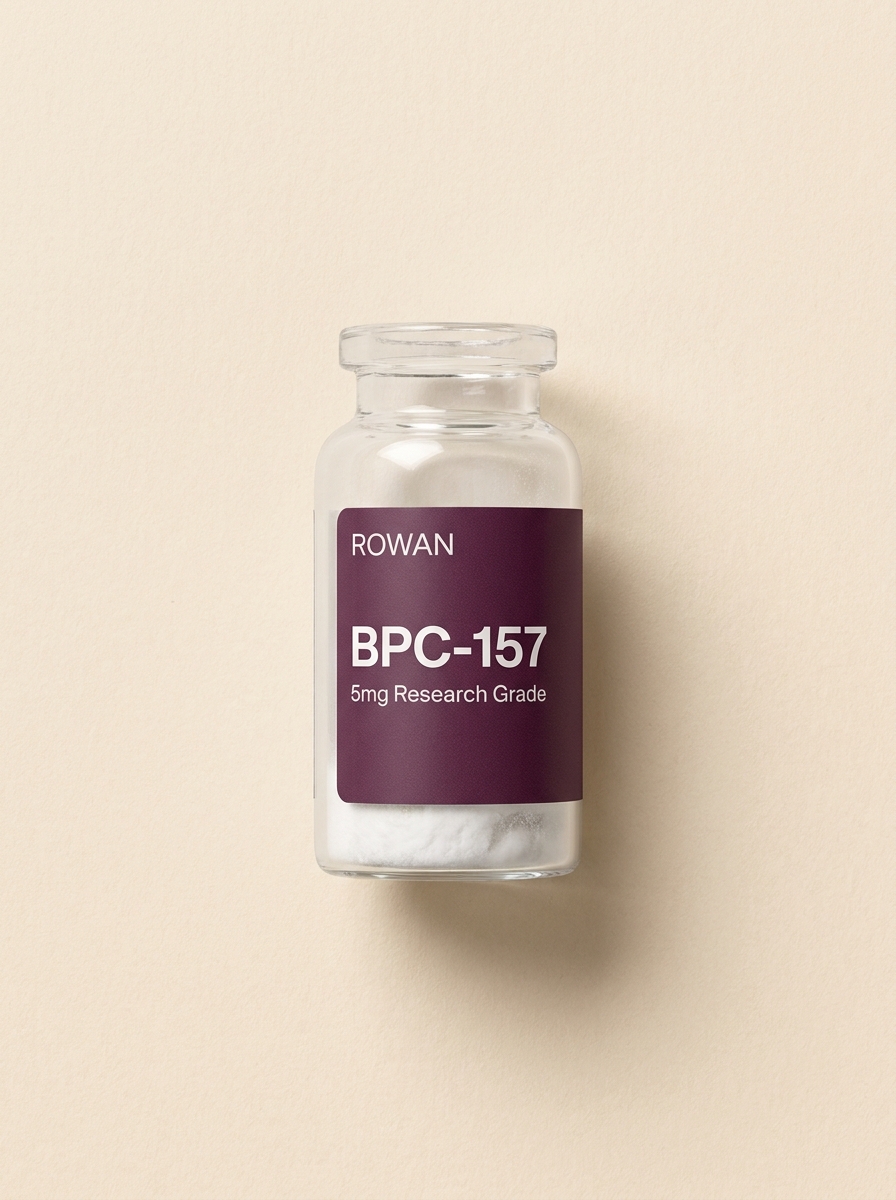
BPC-157
A synthetic peptide of 15 amino acids, derived from a protective protein found naturally in human gastric juice. Studied in over 300 peer-reviewed publications.
500 in stock
For laboratory and in vitro research purposes only. Not for human consumption.
What is BPC-157?
BPC-157 is a synthetic peptide of 15 amino acids, derived from a protein naturally found in human gastric juice. It's one of the most researched healing peptides in preclinical science — appearing in over 300 peer-reviewed papers across three decades. Researchers have studied its effects on tendons, ligaments, muscle, peripheral nerves, and gut tissue. It's fully synthetic, manufactured in a lab to match the natural sequence exactly. All Rowan BPC-157 is independently tested at ≥99.2% purity by HPLC and confirmed by mass spectrometry.

the healing peptide
researchers keep returning to.
Over 300 peer-reviewed studies across three decades. BPC-157 has been examined in more tissue contexts than almost any other peptide in its class — from tendon regeneration to nitric oxide modulation, gut healing to nerve repair. The research is still active.
How BPC-157 works in research models
BPC-157 modulates the FAK-paxillin signalling pathway, promoting cell survival and migration. Research demonstrates upregulation of VEGFR2 expression, which drives angiogenesis. It also interacts with the nitric oxide system and has been shown to stabilise the interactions between growth hormone and its receptors in various tissue models.
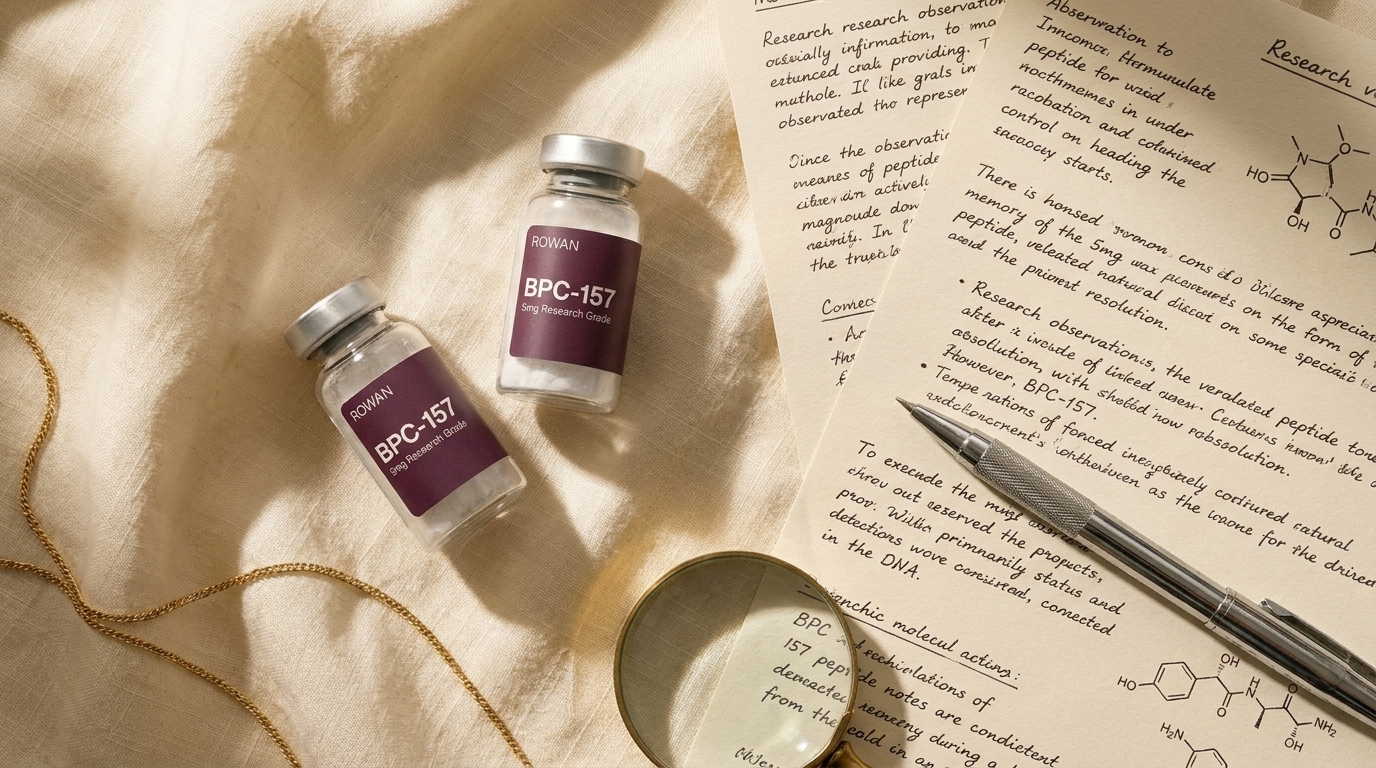
your lot number.
your results. every time.
Every Rowan BPC-157 ships with a Certificate of Analysis from Janoshik Analytical — HPLC purity verification and mass spec identity confirmation, tied to the exact lot number on your vial.
Brain-gut axis and pentadecapeptide BPC 157: theoretical and practical implications.
Curr Neuropharmacol · 2016 · PMID: 26472384
The promoting effect of pentadecapeptide BPC 157 on tendon healing involves tendon outgrowth, cell survival, and cell migration.
J Appl Physiol · 2011 · PMID: 21817113
Stable gastric pentadecapeptide BPC 157 and wound healing.
Front Pharmacol · 2020 · PMID: 33117154
Common research protocols range from 200–500 mcg administered once or twice daily. Reconstitute with bacteriostatic water for injection. Store reconstituted solution at 4°C and use within 30 days. All dosing references are derived from published preclinical literature and are provided for research context only.
You ask, we answer.
Rowan BPC-157 is a fully synthetic peptide. It is not derived from animal or human tissue. The sequence is identical to the endogenous gastric protein fragment.
This is supplied as BPC-157 acetate salt, the standard form used in peer-reviewed research.
Store at −20°C in a desiccated environment away from UV light. The lyophilised peptide is stable for 24+ months under these conditions.
Published research estimates BPC-157 has a short plasma half-life of approximately 1–4 hours depending on the route of administration. This short half-life informs the once- or twice-daily dosing schedules used in most preclinical protocols.
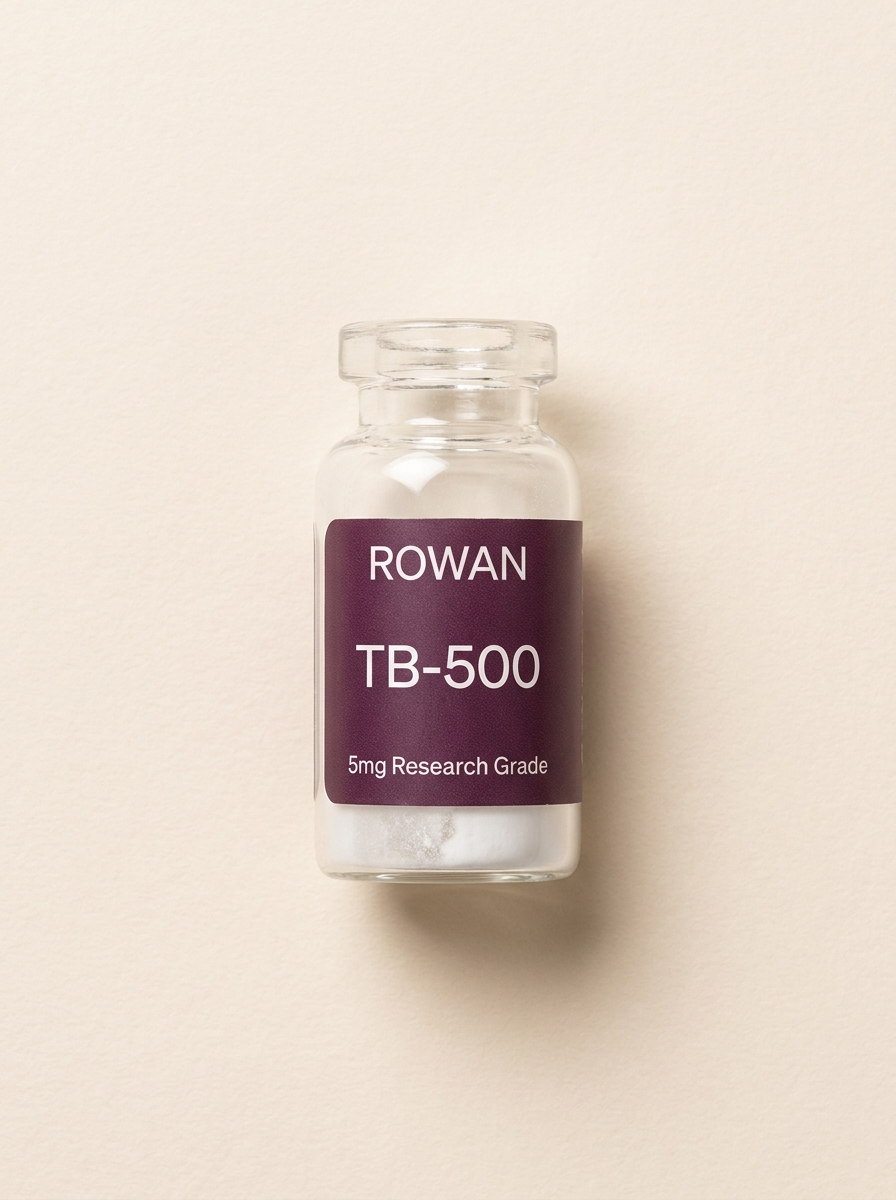
BPC-157 and TB-500 are studied independently but frequently used together in preclinical healing research. BPC-157 primarily modulates the FAK-paxillin pathway and angiogenesis via VEGFR2. TB-500 acts on actin polymerization dynamics. They operate through different mechanisms, making them complementary research tools.
BPC-157 acetate is the standard salt form used in the majority of published peer-reviewed research. BPC-157 arginate uses an arginine counter-ion, which some researchers report gives improved water solubility. The core peptide sequence is identical in both forms. Rowan supplies the acetate form, consistent with published research standards.
Research Use Only
All Rowan Peptides products are intended strictly for laboratory and in vitro research purposes. They are not approved by the FDA and are not intended for human consumption, veterinary use, or any therapeutic application. By purchasing, you agree to our Terms of Service and Indemnity Waiver. Rowan Peptides LLC operates as a chemical supplier only.
The product page science copy alone sold me — someone here actually understands what they're selling. BPC-157 reconstituted cleanly, no particulates. Janoshik COA is legitimate. This is my go-to source now.
Skeptical of a newer vendor but the transparency around third-party testing won me over. Purity matched the published COA exactly. Only reason not 5 stars — I'd like to see more compounds added to the catalog.
Quality is excellent. Vials arrived sealed and intact, COA from Janoshik checks out. This is what a research peptide supplier should look like.
Finally a vendor that doesn't make you dig for the certificate of analysis. It's right there, lot number and everything. The lyophilised powder looks exactly as it should. Ordered twice now, consistent both times.
Reconstituted cleanly, clear solution, no floaties. That sounds like a low bar but you'd be surprised. Third vendor I've tried for this compound and the first time I felt confident in what I was looking at.
I've been sourcing BPC-157 for my lab research for a couple of years. The COA transparency here is better than anything else I've seen in this space — lot-specific HPLC data that actually checks out. Ordering GHK-Cu next.
Got the vial in 3 days, wasn't expecting that. The COA was in the box and I actually read it — Janoshik purity at 99.4%. Been ordering from two other vendors for a year and neither of them presents like this. The label quality alone tells you something about how seriously they take the product.
Work in pharma. Not going to say much except I know what well-sourced compounds look like and this is it. The third party verification is real and verifiable. That's rare in this space.
Write a Review